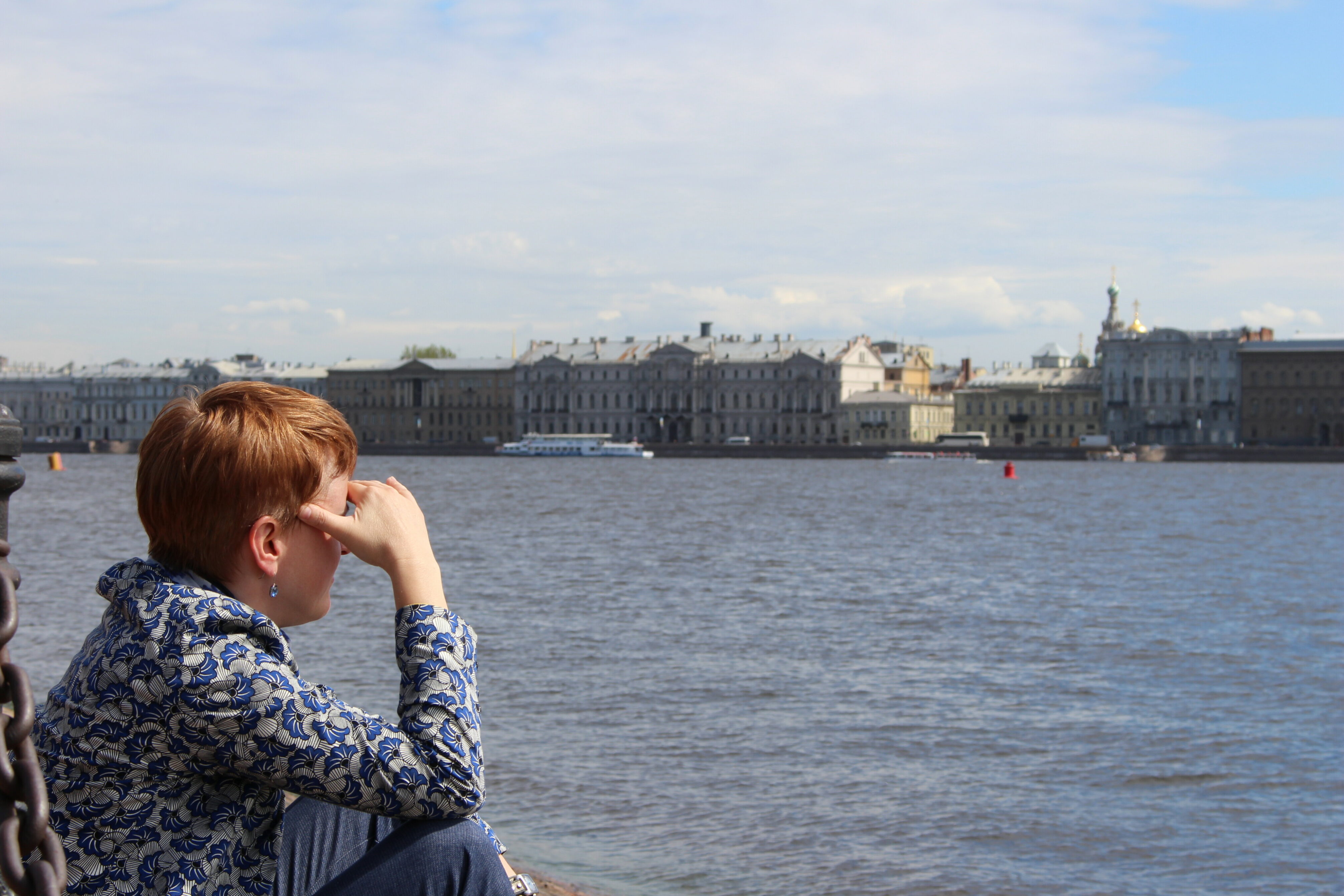
On October 11, 2023, Professor Julia Obertreis passed away at the age of 54. She continued to offer lectures in the summer semester, and in September 2023, she participated in the German Historikertag in Leipzig. Some of us had the opportunity to meet her there. It is all the more shocking to receive the news of her passing.
Julia Obertreis was born on September 28, 1969, in Solingen. After graduating in 1988 from school in Ratingen, she studied history and Russian philology from 1988 to 1996 at the Free University of Berlin and from 1993 to 1994 at the State University of St. Petersburg. During the period of transition in Eastern Europe, she traveled throughout the (former) Soviet Union and reached Central Asia and Uzbekistan for the first time. Her later research remained closely connected to these two geographical poles: St. Petersburg as the gateway to the West and Central Asia as the colonial periphery of the Russian Empire.
Her dissertation, which she completed at the Department of History and Cultural Studies at the Free University of Berlin under the supervision of Klaus Meyer, explored the history of housing in Leningrad from 1917 to 1937. In her study, she combined social historical approaches with everyday and spatial history. In her work she used a wide variety of sources, including numerous oral history interviews. For her conceptually innovative work, which was published in 2004, she was awarded the Young Researchers Prize by the German Society for East European Studies in 2002. Her dissertation remained an important point of departure for her teaching, providing students with intimate knowledge about Soviet everyday life and inspiring them to study the history of Russia and Eastern Europe. Unforgettable is the visit to a former communal apartment in St. Petersburg during an excursion with students, and the conversation with an elderly resident who vividly recounted her life.
After completing her doctorate in Berlin, Julia Obertreis initially worked as a freelancer, then, from 2002 to 2004, she became a research associate at Bochum University, and from 2004 to 2012 she worked at the Chair of Modern and Eastern European History in Freiburg im Breisgau. During this time, she wrote her habilitation thesis on the history of cotton cultivation and irrigation in Central Asia. Her research covered the entire era of imperial and Soviet rule over Central Asia, linking the history of water management in Uzbekistan and Turkmenistan with global contexts, such as the history of colonialism and transnational ecological debates. Thereby, the study addresses some of the central issues that continue to affect us today, particularly the environmental and social legacies of Soviet imperial modernity. The work came out in 2017 under the title “Imperial Desert Dreams: Cotton Growing and Irrigation in Central Asia, 1860–1991”.
In 2012, Julia Obertreis was appointed to the Chair of Modern and Eastern European history at the Friedrich-Alexander University in Erlangen-Nuremberg. During her years in Erlangen, Julia Obertreis initiated numerous new projects. In a theoretical and methodological perspective, she advanced debates on the connections between the history of Russia and Eastern Europe and global history. She also studied the history of television during the Cold War, the history of water infrastructures in Central Asia, St. Petersburg, and Leningrad, and lastly, in an unfinished project, the history of smoking and non-smoking in a transnational and global perspective. Her research did not limit itself on the supposedly canonical topics or on major political decision-makers but rather on the social preconditions for individual experiences and actions. Julia Obertreis never rested on her laurels; she enjoyed tackling methodological challenges and turning to new topics and previously unknown regions. Her intrinsic curiosity and bold openness made her a significant innovator in her field, capable of inspiring others with her enthusiasm and energy.
Her research formed the basis for the esteem she received in the academic community, as reflected in her numerous roles and positions. She was a member of the Editorial Board of the journal Slavic Review, as well as series editor and member of numerous academic advisory boards and professional associations. From 2015 to 2021, she served as the first chairwoman of the Association of Historians of Eastern Europe (Verband der Osteuropahistorikerinnen und -historiker e.V., VOH), significantly shaping Eastern European history as a discipline that actively engages in historical and political debates and takes a clear stance.
At her university, the Friedrich-Alexander University, she was a highly respected colleague. Whether as department spokesperson, a member of the faculty council, or as the women’s representative of the Faculty of Philosophy and Theology, Julia Obertreis acted with dedication, foresight, and irrefutable warmth. She profoundly influenced the collaboration within the Department of History and interdisciplinary discourse within the faculty, for example by co-initiating the Master’s program “Empires and Transcontinental Spaces.” Beyond the lecture halls and class rooms, Julia Obertreis’ work was characterized by communication and dialogue. She was engaged in Erlangen’s partnership with the Russian sister city, Vladimir, and initiated numerous debates on pressing societal issues.
She led her chair as a place of lived diversity, not only in terms of gender, age, or social background but also in terms of life paths and political beliefs. She wonderfully combined the joy of scholarly discourse with the pleasure of social interaction. Within the framework of an advanced seminar, at Christmas and summer parties, and during the numerous field trips, a strong sense of closeness developed within and beyond her team.
Her final year of life was overshadowed by personal tragedies. In February 2022, a severe illness was diagnosed. This happened at the very moment when the Russian war against Ukraine began. Eastern Europe, which she had come to know 30 years earlier with a sense of hope and renewal, was now marked by war and violence. During this time, she lost contact with friends in Russia and St. Petersburg. Simultaneously, her department was in close contact with colleagues at the Karazin University in Kharkiv, which had been severely affected by the war. Julia Obertreis had visited her colleagues and friends in Ukraine multiple times as a guest researcher and as an organizer of field trips. Despite her illness, she made every effort to provide support and assistance to her Ukrainian colleagues through invitations to the department and joint online seminars.
Julia Obertreis passed away on October 11, 2023, in the prime of her academic work and influence. Her death leaves a deep void. We are infinitely saddened to lose her as an academic teacher, colleague, and friend. Her voice, wisdom, openness, approachability, wit, and commitment will never be forgotten.
On behalf of the Department of History and the Chair,
Simone Derix and Moritz Florin